
Details
Centralized Medical Gas Pipeline
HomeCentralized Medical Gas Pipeline Systems (MGPS)
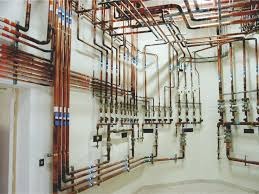
Medical Gas Pipeline Systems (MGPS)
Karakoram Healthcare Services LLP (K2 healthcare) has completed over 3,00,000mtrs of MGPS pipelines Pan India across 50 projects of multiple sizes.
What needs to be in the system
- A bulk source — manifold cylinder bank or bulk LMO (liquid medical oxygen) tank — sized to facility demand, with automatic changeover to a reserve source
- Area Valve Service Units (AVSUs) at every ward/floor/department — lockable, clearly labeled, so one section can be isolated without shutting gas off to the whole hospital
- Zone valve boxes ahead of every critical area — OT, ICU, HDU
- Gas-specific outlets (O2, Medical Air, Vacuum, N2O, scavenging) matched to what each department actually needs, not every gas in every room
- Area alarm panels at ward level, plus a master alarm at a 24/7 staffed point — showing pressure, source status, and changeover in progress
- Medical-grade degreased copper pipework, brazed and pressure-tested, with gas-specific fittings so lines can’t be cross-connected, should adhere to EN:13448 grade
Standard it should comply with
- HTM 02-01 Part A/B — the most widely referenced spec for MGPS design, installation, testing and validation
- ISO 7396-1 — the international standard specifically for medical gas pipeline systems
- NFPA 99 — US healthcare facilities code, its own gas system requirements, sometimes specified by international consultants
- PESO (India) — statutory licensing authority for bulk oxygen/LMO storage; mandatory before a bulk O2 source can be commissioned, not optional
- NABH accreditation (India) — a validated MGPS is a mandatory checklist item for NABH certification
How to assess your hospital’s needs
Size by LPM (litres/min) demand, not bed count:
| Area | Peak LPM (in most observed cases) |
|---|---|
| ICU / HDU bed | 10–15 |
| OT | ~10 |
| General ward bed | 2–5 |
PSA vs LMO — we steer away from PSA as primary:
| PSA (generator) | LMO (bulk tank) | |
|---|---|---|
| Purity | 90–96%, dips under load | 99.5%+, stays steady |
| Capacity | Fixed — can’t flex for a surge | Scales with tank/refill |
| Best as | Backup only | Primary source |
| 2021 track record | Many went defunct in 1–2 yrs | Industry standard |
| PESO license | Not needed | Mandatory |
Bottom line: LMO primary, PSA as backup — not the other way round. A PSA-only hospital is one maintenance lapse from a crisis.
- Extending live pipework vs clean new-build — confirm which, they need different execution plans
How to choose a vendor
- Check their track record specifically with PESO licensing and bulk LMO commissioning, if that’s what you need — not every contractor has actually done this
- Ask for validation records from a live hospital project — pressure test logs, purge records, alarm test certificates — not a product catalogue
- Check if they’ve handled your build type before — new-build pipework and a retrofit around occupied wards are different jobs
- Confirm who performs ongoing re-validation after handover — MGPS needs periodic re-testing, it isn’t a one-time install
What not to do
- Don’t hand MGPS to a general plumbing contractor as “just pipework” — it needs gas-specific brazing, cleaning and certification
- Don’t skip area valve service units to save install time — without them, any leak or repair means cutting gas to a whole floor
- Don’t commission without full pressure testing, purging and alarm testing completed and documented
- Don’t retrofit around a live hospital without an isolation plan agreed with clinical staff — cutting gas to an occupied ward without notice is a safety incident, not a scheduling issue